

Working in the United Arab Emirates can offer excellent career opportunities, competitive salaries and access to a diverse international workforce. However, whether you are moving to the UAE for your first job or already working here, it is important to understand how employment works.
This UAE Employment Guide explains the major things employees and job seekers should know about working in the UAE, including work visas, employment contracts, salaries, working hours, annual leave, sick leave, resignation, termination, end-of-service benefits and employee rights.
The UAE Government provides specific rules covering employment in the private sector, including job offers, work permits, contracts, working hours, wages, leave and end-of-service benefits.
Important: Employment rules can vary depending on your employment sector, free-zone authority, contract and individual circumstances. This guide is intended for general information and should not be considered legal advice. Always verify important employment or visa matters through the relevant UAE government authority.
Table of Contents
1. How Employment Works in the UAE
The UAE employment system includes government regulations designed to establish rules between employers and employees.
For private-sector workers, employment generally involves several stages:
Job offer → Work permit → Employment contract → Entry/residence procedures → Medical requirements where applicable → Emirates ID/residency procedures → Start employment
The UAE Government's official employment platform provides information covering job offers, work permits, employment contracts, working hours, wages, leave, employee protection, termination and end-of-service benefits.
For employees, understanding these stages can help prevent common problems such as accepting an unclear job offer, working without the appropriate authorization or discovering that the actual salary differs from the agreed package.
2. What Is a UAE Work Visa?
A UAE work visa allows an eligible foreign employee to legally live and work in the UAE under the applicable employment and residency arrangements.
The UAE Government identifies the standard work visa as the route generally used by employees of government and private-sector employers. There are also other residence options, including the Green Visa for eligible skilled employees under self-sponsorship arrangements.
A normal employer-sponsored employment arrangement commonly involves the employer handling the required work permit and related employment procedures.
Work visa vs residence visa
These terms are often confused.
A work permit authorizes an individual to work for an employer under the applicable rules.
A residence visa or residence status allows an eligible foreign national to reside in the UAE.
In a standard employer-sponsored arrangement, employment authorization and residence procedures are connected, but they are not exactly the same thing.
3. Who Sponsors a UAE Work Visa?
For many private-sector employees, the employer is responsible for the employment and work-permit process.
Before accepting a job, employees should understand:
Never rely only on a verbal promise.
A written offer and employment contract provide much stronger evidence of the terms agreed between an employer and employee.
4. UAE Work Visa and Employment Process
Although the exact process can differ according to the employee's circumstances and authority involved, a typical employment process may include:
Step 1: Find a job
The employee receives an offer from a UAE employer.
Step 2: Review the job offer
Before accepting, carefully check:
Step 3: Work permit procedures
The employer normally handles the relevant work permit process for an employee under its sponsorship.
Step 4: Entry or status procedures
Depending on whether the employee is already in the UAE or coming from abroad, the applicable immigration process may differ.
Step 5: Medical and identification procedures
Where applicable, employees complete required medical examination and identification/residence procedures.
Step 6: Start employment
Once the necessary authorization and employment procedures have been completed, the employee can work according to the applicable employment arrangement.
The UAE Government provides official channels for visa applications and tracking, including ICP-related services and Dubai-specific channels where applicable.
5. Documents Commonly Required for Employment
The exact requirements depend on the employee, employer, profession and immigration situation.
Commonly requested documents may include:
Some professions may have additional qualification or licensing requirements.
Important tip
Make sure the spelling of your name, passport number, job title and other important personal details are correct in official documents.
A small error can create unnecessary administrative problems later.
6. UAE Employment Contracts
An employment contract is one of the most important documents in your working relationship.
It establishes the terms and conditions agreed between the employer and employee.
The UAE Government explains that private-sector employment contracts can include different work arrangements, such as full-time and part-time employment, as well as certain other permitted working models.
Why your contract matters
Your employment contract can help you understand:
Always read your contract before signing it.
7. Types of Employment and Work Arrangements
The UAE private-sector framework recognizes different employment arrangements.
Depending on the applicable rules and contract, these can include:
Full-time employment
An employee works exclusively for one employer under a full-time arrangement.
Part-time employment
An employee works fewer hours or days than a full-time employee according to the applicable arrangement.
Temporary work
Employment may be arranged for a specific temporary assignment or period.
Flexible work
Working arrangements may provide flexibility according to the agreed employment structure.
Remote work
Some jobs can be performed remotely where the employer and applicable rules permit it.
Job sharing
A job may be divided between employees under an appropriate arrangement.
The UAE Government lists these as recognized work arrangements within the private-sector employment framework.
8. What Should Your Employment Contract Include?
Before signing an employment contract, check the following information.
1. Job title
Make sure the position matches the job you were offered.
2. Salary
Understand the total salary and how it is divided between basic salary and allowances.
3. Working hours
Check the normal working schedule and weekly rest arrangements.
4. Probation period
Check how long the probation period lasts and what rules apply during it.
5. Annual leave
Confirm your annual leave entitlement.
6. Notice period
Understand how much notice you must provide if you resign.
7. Benefits
Check whether the package includes:
8. Workplace
Confirm where you are expected to work.
9. Contract type
Make sure you understand whether you are being employed full-time, part-time, temporarily or under another arrangement.
9. UAE Salary and Wage Rules
Salary is one of the most important parts of any employment relationship.
Before joining a company, employees should distinguish between:
Basic salary + allowances = total salary package
For example, an employment package could contain:
Total package: AED 8,000
The exact structure depends on the employment contract.
Why basic salary matters
Basic salary can be particularly important because certain employment calculations, including some end-of-service benefit calculations, are based on the basic wage rather than the employee's entire monthly package.
Therefore, employees should not look only at the total monthly salary.
10. How Employees Receive Their Salaries
UAE private-sector employees should understand how their employer pays wages and whether the employer is using the applicable wage-payment system.
The UAE Government specifically provides information on payment of salaries and wages as part of the private-sector employment framework.
Keep your salary records
Employees should keep:
These records can become important if a salary dispute occurs.
11. Working Hours in the UAE
For private-sector employment, the normal working-hours framework generally provides for 8 hours per day or 48 hours per week, subject to the applicable rules and exceptions.
Working arrangements can vary depending on the industry, role and employment circumstances.
Employees should understand:
Ramadan working hours
The UAE Government states that private-sector working hours are reduced during Ramadan under the applicable rules.
12. Overtime in the UAE
Overtime refers to additional work performed beyond the employee's normal working hours under circumstances where overtime rules apply.
The amount an employee receives for overtime depends on the applicable UAE employment regulations, circumstances of the work and the employee's wage.
Employees should not assume that every extra hour is automatically treated in exactly the same way.
If you regularly work beyond your normal schedule, keep records of:
This can help if there is later a disagreement about working hours or overtime.
13. Annual Leave in the UAE
Annual leave is an important employee entitlement.
Under the UAE private-sector framework, an employee who completes a year of service is generally entitled to at least 30 days of annual leave with full pay. Employees who have worked more than six months but less than one year generally accrue leave at two days per month, subject to the applicable rules.
What employees should know
Annual leave can be subject to:
The UAE Government states that employers may determine leave dates according to work requirements while observing the applicable rules and notifying employees appropriately.
Unused annual leave
Rules apply to carrying forward leave and compensation for unused leave.
When employment ends, eligible employees may receive compensation for legally due unused annual leave according to the applicable rules.
14. Sick Leave and Other Leave Entitlements
UAE private-sector employees may have access to several types of leave depending on their circumstances.
These include:
The UAE Government's official private-sector guidance specifically lists these leave categories.
Maternity and parental leave
Eligible employees should review the current statutory requirements and their employer's policies to understand:
Because leave regulations can change, employees should verify the latest rules before making important decisions.
15. Public Holidays in the UAE
Employees are generally entitled to paid leave for official public holidays under the applicable employment regulations.
If an employee is required to work during a public holiday, compensation rules may apply.
The UAE employment regulations provide for compensation through another day off or payment with an additional amount in specified circumstances.
The exact dates of public holidays can depend on official announcements.
16. Employee Rights in the UAE
Employees should understand that having a job in the UAE also means having responsibilities and protections under the applicable employment framework.
Important employee rights include areas such as:
Right to an employment contract
Employees should have documented employment terms.
Right to agreed wages
Employees should receive wages according to the applicable employment agreement and legal requirements.
Right to leave
Eligible employees have statutory leave entitlements.
Right to a safe workplace
Employers have responsibilities concerning workplace health and safety.
Right to end employment
Employees can resign according to the applicable contract and notice requirements.
Right to raise employment complaints
Employees can use the relevant official channels when employment disputes cannot be resolved directly.
The UAE Government provides dedicated information and channels for protection of workers' rights and resolution of labour disputes.
17. Probation Period
Many UAE employment contracts include a probation period.
Probation allows the employer and employee to determine whether the employment relationship is suitable.
During probation, special rules can apply to:
Employees should carefully read the probation clause before joining.
Important tip
Do not assume that probation means you have no rights.
Employees continue to be protected by applicable UAE employment rules during probation.
18. Resignation and Notice Period
Employees sometimes decide to leave a job because of:
Before resigning, check your employment contract.
What should you review?
The UAE Government states that an employer cannot simply reject a resignation when an employee provides the required notice through an appropriate acknowledged method.
Best practice
Submit your resignation in writing and keep evidence that it was received.
Email is often useful because it creates a dated record.
19. Termination of Employment
Employment can end for different reasons, including:
Employees should understand the difference between a normal termination process and unlawful or arbitrary dismissal.
The UAE Government provides specific guidance on terminating employment relationships and arbitrary dismissal.
If you believe your employment was terminated unlawfully, keep all relevant documentation and seek assistance through the appropriate official channels.
20. End-of-Service Gratuity in the UAE
End-of-service gratuity is one of the most important topics for expatriate employees.
Eligible private-sector employees may receive a one-time end-of-service benefit when their employment ends, subject to the applicable eligibility requirements and calculation rules. The UAE Government specifically identifies end-of-service benefits as part of the private-sector employment framework.
Why your basic salary matters
Gratuity calculations are generally linked to the employee's basic wage, not necessarily the complete salary package.
For example, if your total salary is AED 10,000 but your basic salary is AED 6,000, the calculation may use the basic wage according to the applicable rules.
Keep your records
When leaving a company, check your final settlement for:
If you are unsure whether your final settlement is correct, obtain professional or official guidance.
21. Changing Jobs in the UAE
Changing jobs is common in the UAE's competitive employment market.
Before accepting a new position, check:
Do not leave your existing employment simply because another company verbally promises a job.
Get the new employment offer and relevant documentation first.
22. What to Do If You’re Salary Is Delayed?
Salary delays can create serious financial problems.
If your salary has not been paid as expected:
Step 1: Check your contract
Confirm the agreed salary and payment arrangement.
Step 2: Check your bank account
Make sure the payment was not delayed by a banking issue.
Step 3: Contact HR or payroll
Ask for a written explanation.
Step 4: Keep evidence
Save:
Step 5: Use official complaint channels
If the issue cannot be resolved internally, employees can explore the UAE's official labour-dispute resolution channels.
The UAE Government provides dedicated information for resolving labour disputes and accessing relevant labour services.
23. How to Handle an Employment Dispute
Employment disputes can involve:
Recommended approach
First, try to resolve the issue professionally with your employer or HR department.
If that does not work, collect your evidence and use the appropriate official government complaint or dispute-resolution channel.
Do not delete emails or messages relating to the dispute.
24. Common UAE Employment Mistakes to Avoid
Many employment problems can be prevented by taking a few basic precautions.
Mistake 1: Accepting a verbal job offer
Always request written terms.
Mistake 2: Not reading the contract
Read every important clause before signing.
Mistake 3: Focusing only on total salary
Check the basic salary and allowances separately.
Mistake 4: Working without proper authorization
Make sure your employment and work authorization are properly arranged.
Mistake 5: Ignoring the notice period
Leaving without following the applicable requirements can create complications.
Mistake 6: Not keeping documents
Keep copies of:
Mistake 7: Paying suspicious recruitment fees
Be cautious if someone demands unusual payments in exchange for a job or visa.
The UAE Government specifically provides guidance on avoiding labour and visa fraud.
25. UAE Employment Checklist for Job Seekers
Before accepting a UAE job, use this checklist.
Job Offer
☐ Company name verified
☐ Job title confirmed
☐ Salary confirmed
☐ Basic salary confirmed
☐ Allowances confirmed
☐ Working location confirmed
☐ Working hours confirmed
☐ Weekly rest day confirmed
☐ Annual leave confirmed
☐ Health insurance details checked
☐ Accommodation checked if provided
☐ Transportation checked if provided
Contract
☐ Contract reviewed
☐ Probation understood
☐ Notice period understood
☐ Employment type confirmed
☐ Benefits confirmed
☐ Job responsibilities understood
Visa and Work Authorization
☐ Work permit process understood
☐ Residence procedures understood
☐ Passport details correct
☐ Required medical procedures completed where applicable
☐ Emirates ID procedures completed where applicable
After Joining
☐ Keep employment documents
☐ Keep salary records
☐ Track annual leave
☐ Keep overtime records
☐ Save important HR communications
☐ Understand resignation procedures
26. Frequently Asked Questions About UAE Employment
What is the normal working time in the UAE?
For private-sector employees, the general framework is 8 hours per day or 48 hours per week, subject to applicable exceptions and rules.
How many annual leave days do UAE employees get?
Employees completing one year of service are generally entitled to at least 30 days of annual leave with full pay under the private-sector framework.
Can an employee resign from a UAE job?
Yes. Employees can resign subject to the applicable employment contract and legal notice requirements.
Can an employer reject an employee's resignation?
The UAE Government states that an employer cannot reject a resignation when the employee gives the required notice through an appropriate acknowledged method.
What is a basic salary?
Basic salary is the core wage specified in the employment arrangement, excluding allowances that may form part of the employee's total compensation package.
It is important because certain statutory calculations can be based on basic wage.
Is gratuity available to UAE private-sector employees?
Eligible private-sector employees can receive end-of-service benefits subject to the applicable rules and eligibility conditions.
What should I do if my employer does not pay my salary?
First contact HR or payroll and keep written records. If the matter is not resolved, use the relevant official labour-dispute channels.
Can I change jobs in the UAE?
Employees can change employment subject to the applicable UAE employment, work-permit, contract and notice requirements.
What should I check before accepting a UAE job?
Check the employer, job title, basic salary, total salary, allowances, working hours, leave, probation, notice period, benefits and work authorization arrangements.
Is a UAE work visa the same as a residence visa?
No. Work authorization and residence status are related but serve different legal purposes.
27. Final Thoughts
Understanding UAE employment rules is essential for anyone planning to work or already working in the country.
A good employment relationship starts before your first working day. Carefully review your job offer, employment contract, salary structure, working hours, leave entitlement, probation period and notice requirements.
Employees should also keep copies of important documents and salary records throughout their employment.
If a dispute occurs, avoid relying only on informal advice. Use the official UAE government and labour authorities for the most current information and appropriate complaint procedures.
The UAE's official government platform provides comprehensive information about private-sector employment, including work permits, contracts, wages, working hours, leave, employee protection, labour disputes and end-of-service benefits.
For anyone searching for UAE jobs, work visas, employment contracts, salaries or employee rights, understanding these basics can make the transition into the UAE workforce much easier.
UAELifeInfo.com aims to make important UAE information easier to understand so residents, expatriates and newcomers can make better-informed decisions about life and work in the UAE.
Official Resources
For the latest legal and employment information, always verify important matters through official UAE government sources.
Disclaimer: This article is provided for general informational purposes. UAE employment, immigration and labour regulations may be updated, and individual circumstances can differ. Always verify current requirements with the relevant UAE government authority or obtain qualified professional advice for a specific legal or employment matter.
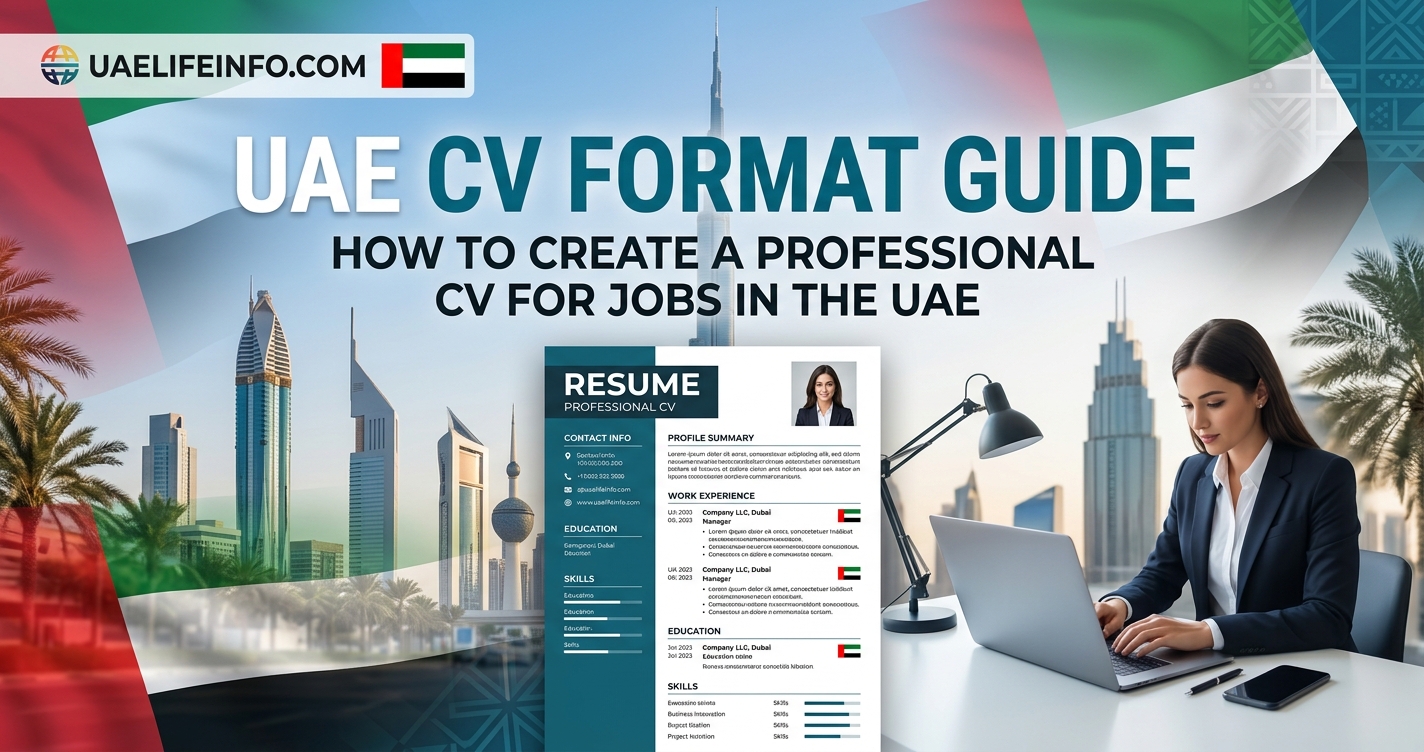
A well-structured UAE CV should be easy to read, professionally presented, relevant to the job, and compatible with Applicant Tracking Systems (ATS) w...
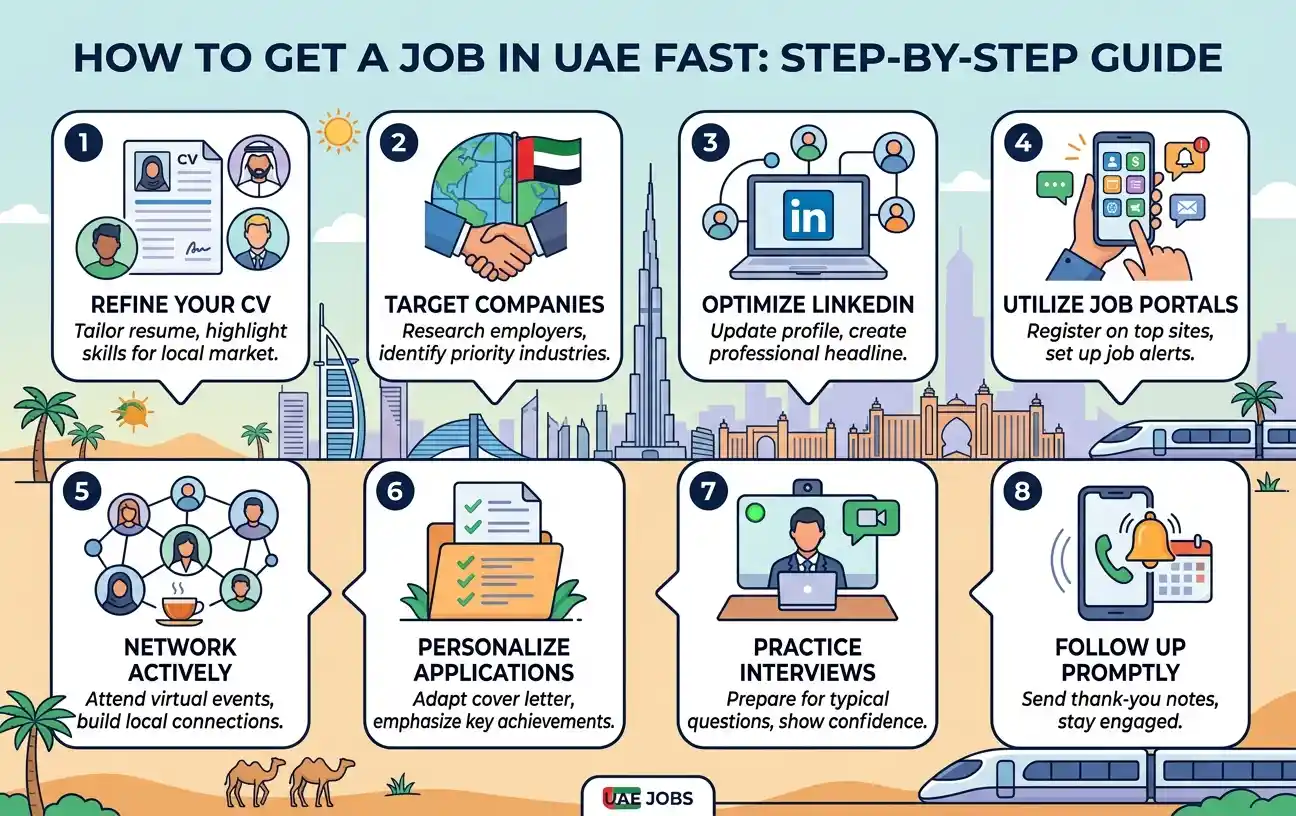
Finding a job in the UAE can be life-changing, especially for expats looking for better career opportunities. With the right strategy, you can land a ...